
Eticas.ai has been evaluating AI systems in production since 2012. This is where we share what we’ve learned. You’ll find case studies from client work, practical guides on AI governance and evaluation, reports on emerging risks, interviews with practitioners, and a glossary of the concepts that matter most in the field. Whether you build AI, deploy it, or are accountable for its outcomes, this is the evidence base we work from.
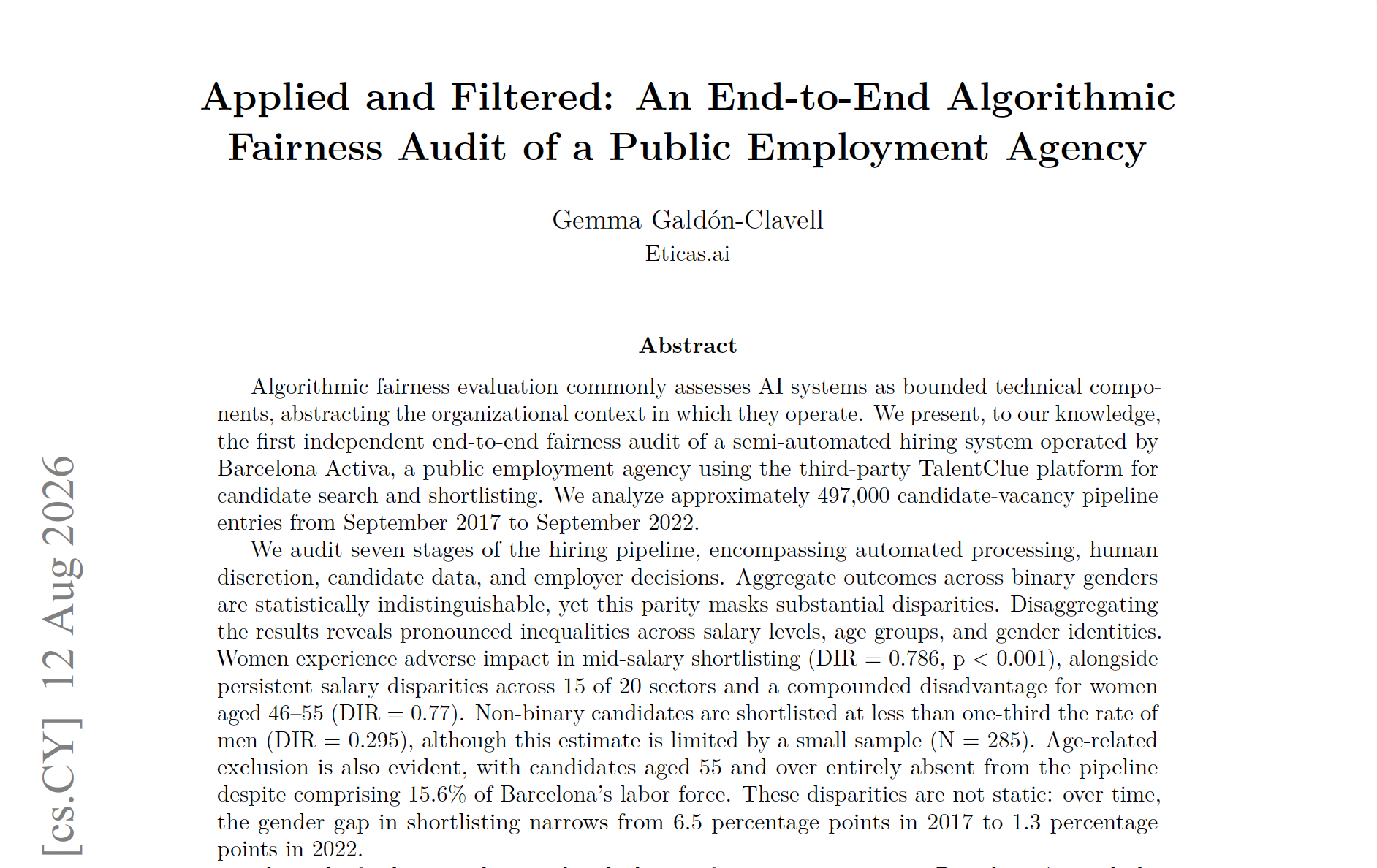
Why Aggregate Metrics Miss Bias in AI Hiring
Barcelona Activa's AI hiring pipeline looked fair in aggregate. A stage-by-stage evaluation found five disparities hiding underneath. Here's the methodology.
Evaluation of an Algorithmic Hiring System: A Public-Sector Case Study
A public employment agency in Europe relies on a third-party algorithmic platform to shortlist candidates for job vacancies, a system classified as high-risk under the EU AI Act. Eticas.ai conducted an independent, post-deployment fairness and bias evaluation of that system across five years of operational data. The evaluation found systematic disparities in shortlisting outcomes by gender, age, education level, and national origin — including adverse impact for women in mid-salary roles and the near-total exclusion of candidates aged 55 and over. Eticas.ai delivered targeted recommendations to address the findings.
Detecting bias in AI hiring systems
The FINDHR project introduced practical tools, guidelines, and auditing frameworks designed to reduce discrimination in AI-assisted hiring. These resources support more transparent, inclusive, and accountable recruitment practices across Europe.
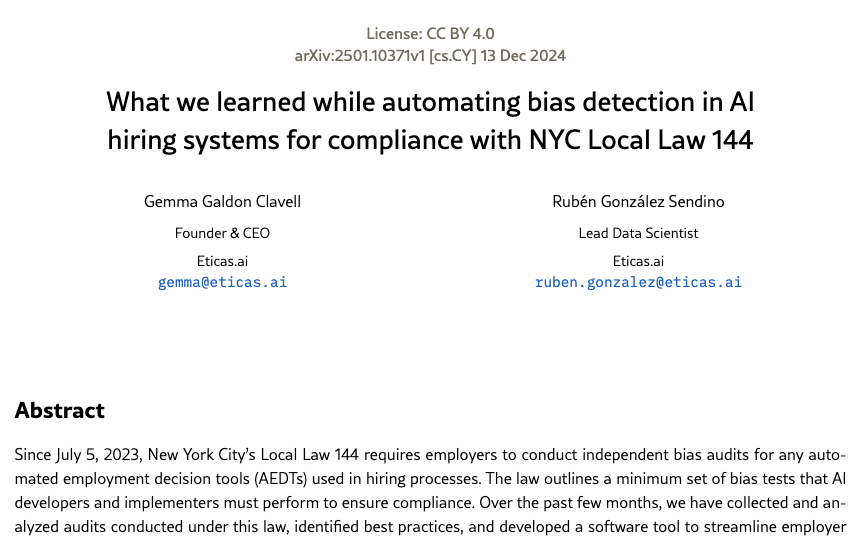
What We Learned Automating Bias Audits for NYC Local Law 144
Since 2023, New York City's Local Law 144 has required employers to run independent bias audits on any automated employment decision tool (AEDT) used in hiring. At Eticas.ai, we built ITACA_144 — a version of our broader bias-auditing platform, ITACA_OS — to help employers meet this requirement. Along the way, we surfaced several structural gaps in the law that limit how effective it can be, and we believe those lessons are relevant well beyond New York.