Eticas.ai has been evaluating AI systems in production since 2012. This is where we share what we’ve learned. You’ll find case studies from client work, practical guides on AI governance and evaluation, reports on emerging risks, interviews with practitioners, and a glossary of the concepts that matter most in the field. Whether you build AI, deploy it, or are accountable for its outcomes, this is the evidence base we work from.
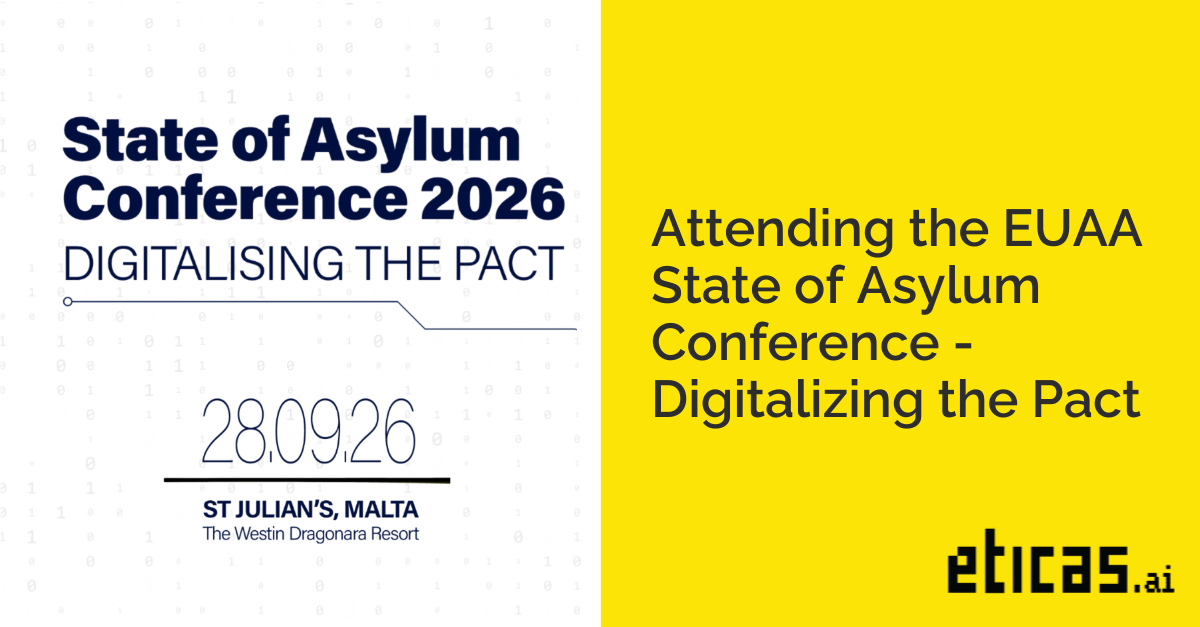
Digitalising the Pact: EUAA State of Asylum Conference
As the EU's Pact on Migration and Asylum enters full application, our Founder & CEO Gemma Galdon Clavell joins the EUAA's State of Asylum Conference 2026 to discuss what independent evaluation of high-risk migration AI actually requires.

The Eticas Risk Taxonomy Is Now Part of IBM's Risk Atlas Nexus
IBM Research has added the Eticas Risk Taxonomy to Risk Atlas Nexus, its open-source AI governance toolkit, now available to every user of the tool.
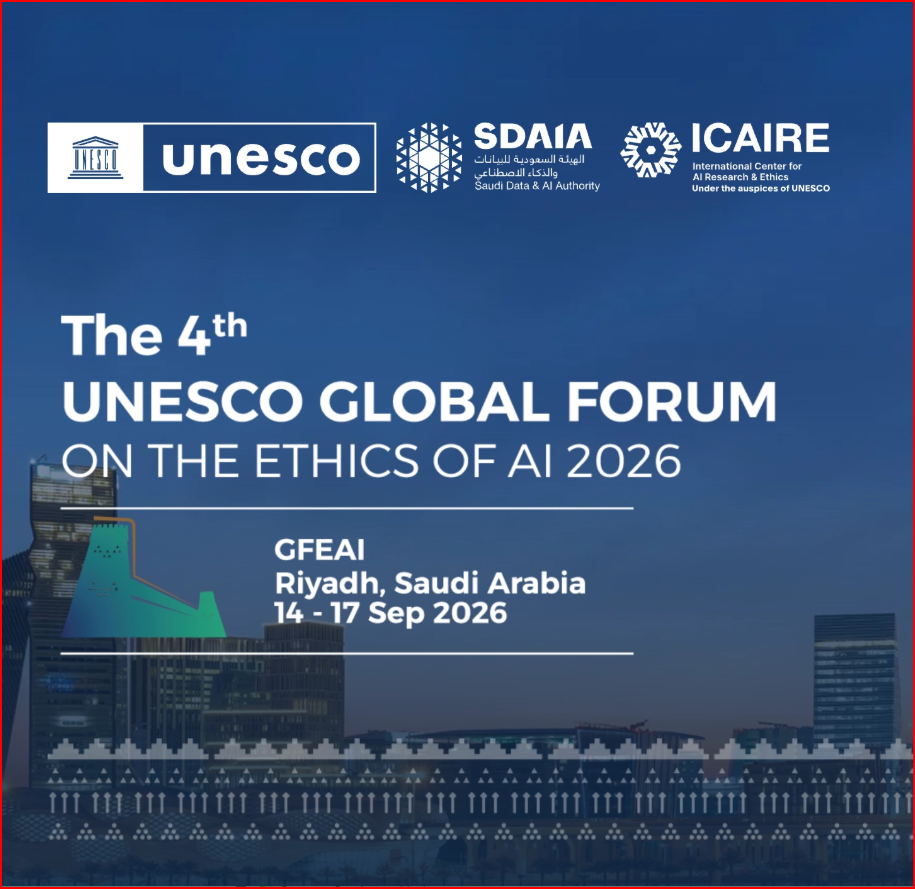
Our CEO at UNESCO's 4th Global Forum on the Ethics of AI
Eticas.ai's Gemma Galdon-Clavell leads a GNAIS workshop and speaks at UNESCO's 4th Global Forum on the Ethics of AI in Riyadh, 14–17 September 2026.
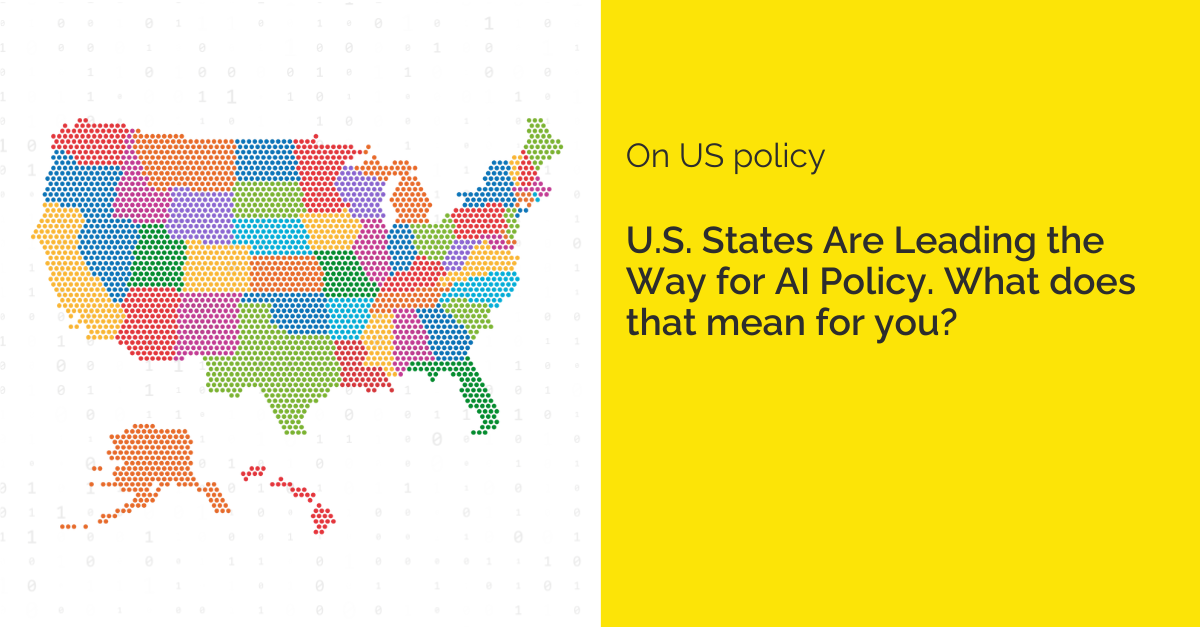
Navigating the 2026 Wave of U.S. State AI Regulations
27 U.S. states passed 84 new AI laws in 2026. See how California, New York, and Illinois are reshaping compliance and why independent evaluation matters.
Eticas.ai Joins PACT AI as Founding Member to Scale Trust in the AI Economy
Today, Eticas.ai announced that it is a founding member of the newly established Partnership for Assurance, Credibility and Trust on AI (PACT AI), a new cross-sector coalition that brings together enterprises, technical experts, and civil society to build the shared infrastructure to verify model behavior. As a founding member of PACT AI, Eticas.ai is helping establish the science-backed standards and practices that will define trusted AI deployment. It's how we can all collectively ensure that the technology powering our economy is safe, secure, and reliable now and into the future.
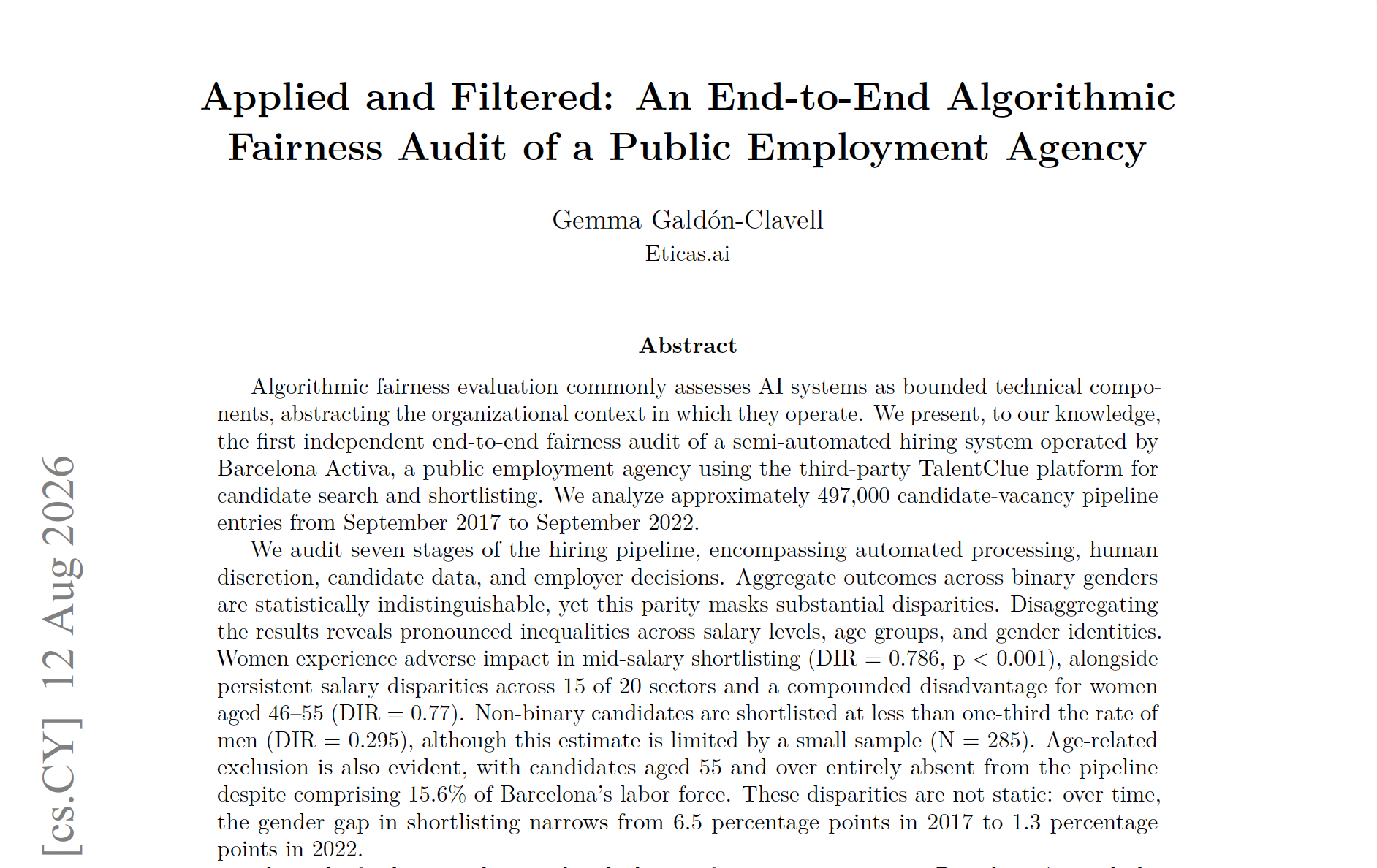
Why Aggregate Metrics Miss Bias in AI Hiring
Barcelona Activa's AI hiring pipeline looked fair in aggregate. A stage-by-stage evaluation found five disparities hiding underneath. Here's the methodology.
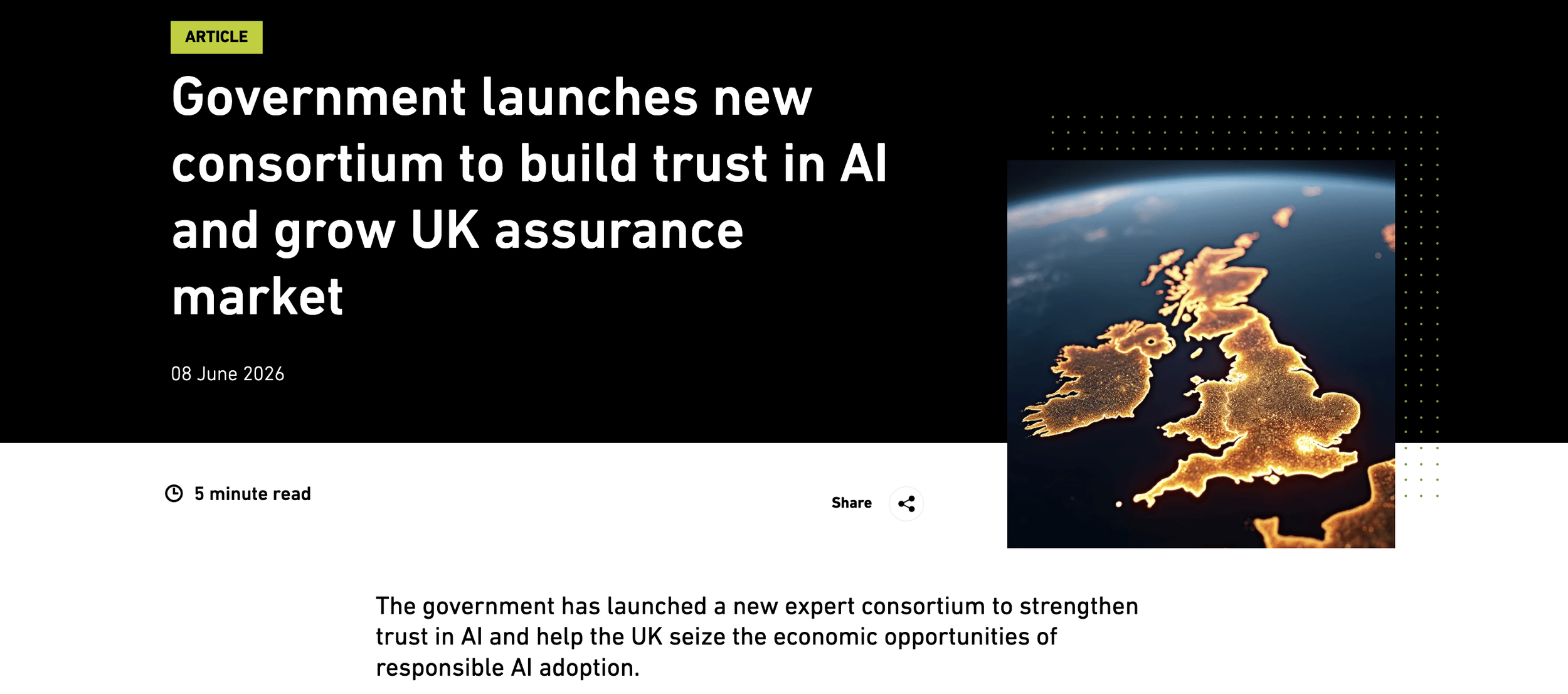
Our CEO at the Launch of the UK's AI Assurance Stakeholder Consortium
Eticas.ai's Founding President, Dr. Gemma Galdon-Clavell, will join the launch of the UK's AI Assurance Stakeholder Consortium in London, convened by the Department for Science, Innovation and Technology (DSIT) and led by BCS, The Chartered Institute for IT.
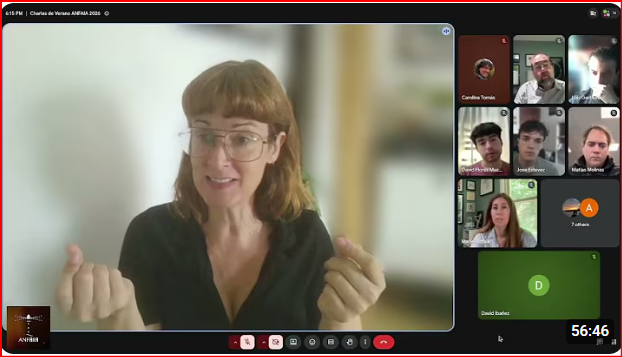
Gemma speaks to ANFAIA community
Eticas.ai's Founder & CEO, Dr. Gemma Galdón-Clavell, recently sat down with a group of young students from the ANFAIA community for a conversation about her professional journey and the case for auditing artificial intelligence. The full session is in Spanish — for readers who don't speak the language, here's an English recap of the main themes she covered.
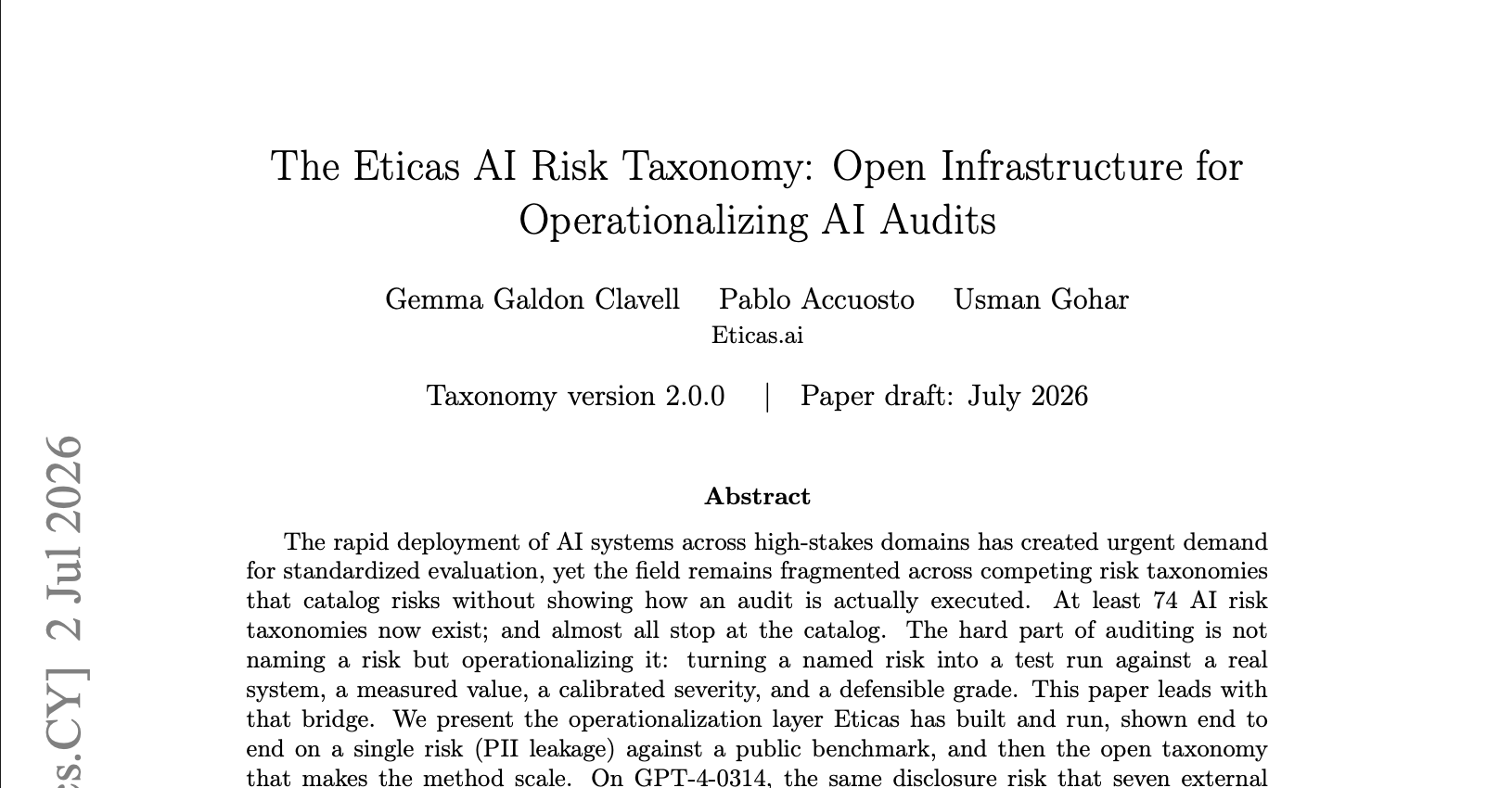
The Eticas AI Risk Taxonomy: Operationalizing AI Evaluations with Measurable Proof
Eticas.ai's open AI risk taxonomy turns accountability principles into measurable proof: a tested, graded method for operationalizing AI audits.
Evaluation of an Algorithmic Hiring System: A Public-Sector Case Study
A public employment agency in Europe relies on a third-party algorithmic platform to shortlist candidates for job vacancies, a system classified as high-risk under the EU AI Act. Eticas.ai conducted an independent, post-deployment fairness and bias evaluation of that system across five years of operational data. The evaluation found systematic disparities in shortlisting outcomes by gender, age, education level, and national origin — including adverse impact for women in mid-salary roles and the near-total exclusion of candidates aged 55 and over. Eticas.ai delivered targeted recommendations to address the findings.
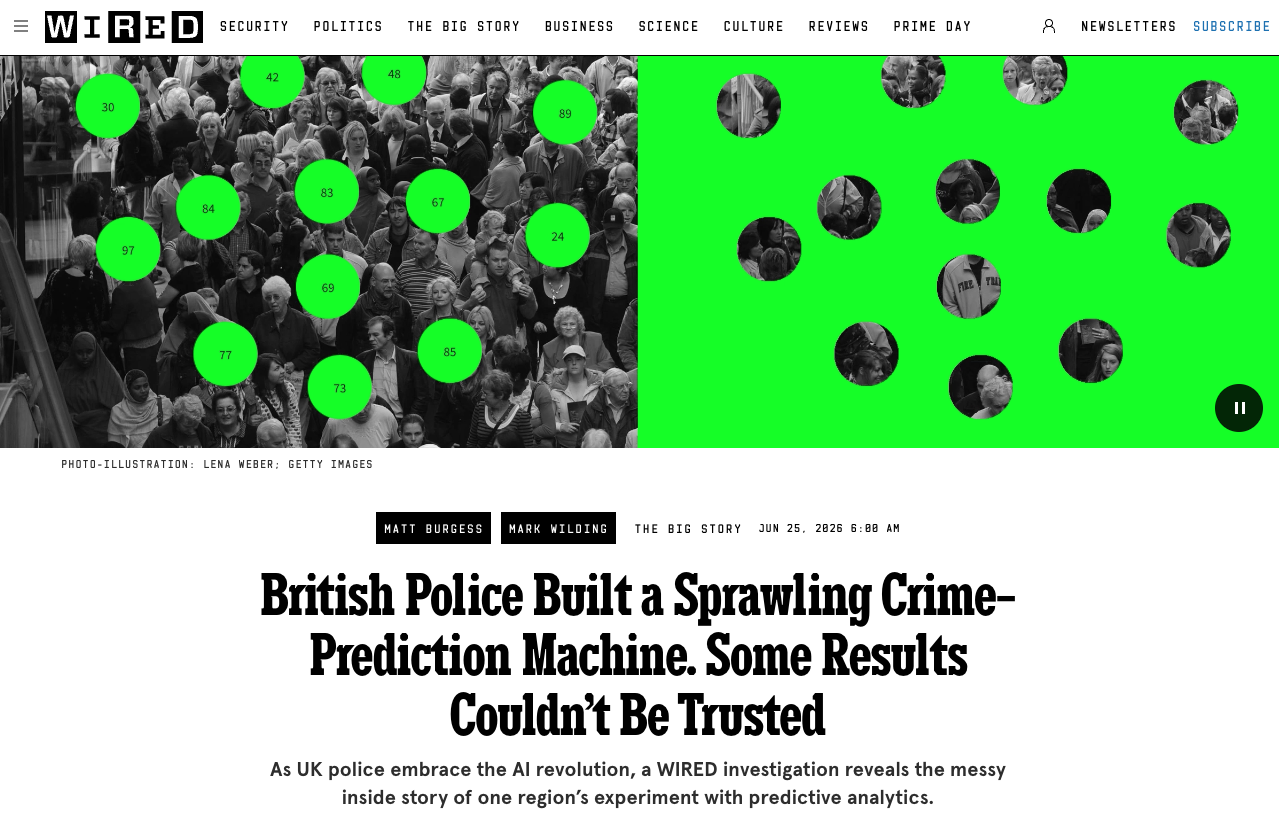
WIRED trusts Eticas’ expertise in UK investigation
WIRED trusted Eticas as an expert to support their rigorous investigative work, and the work has finally been made public! Avon and Somerset Police built at least 23 predictive models. Some scored close to half a million people. For years, almost no one outside the force knew they existed. A major WIRED and Liberty Investigates investigation — supported by the Bristol Cable and Lighthouse Reports — has documented what happened next. Eticas reviewed the performance data the force disclosed and found models operating at precision rates below 10 percent, metrics shifting in ways inconsistent with well-governed systems, and bias testing that measured average risk scores by ethnicity without testing for discriminatory outcomes. Two child exploitation models were scrapped. Their source code could not be found. What the Bristol case makes visible is the distance between deploying an AI system and understanding what it is actually doing. The data existed. The performance records existed. The gap was in who was looking at them, with what methodology, and with enough independence to say plainly what they showed. High-stakes AI does not fail loudly. It accumulates decisions. The people affected rarely know they were scored.

Frequencia CEO - Podcast (v.o. Spanish)
Eticas.ai isn't a pivot or a trend. In her own words: it's her legacy! Her way of contributing to a world where technology is built to actually work in it, not just in a lab. Thirteen years later, the market is catching up. Gemma tells the full story in a recent episode of Frecuencia CEO, the podcast produced by @Qonto.
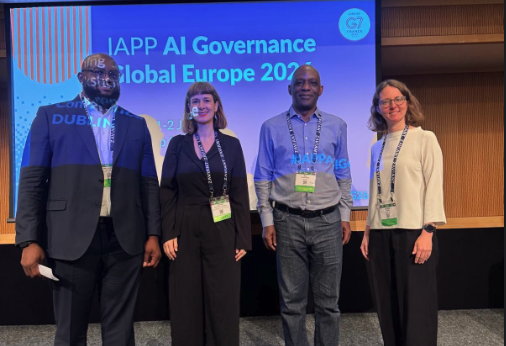
IAPP AI Governance Global Europe
Gemma took the stage at the IAPP AI Governance Global Europe conference in Dublin as part of the AI System Audits and Assurance workshop.
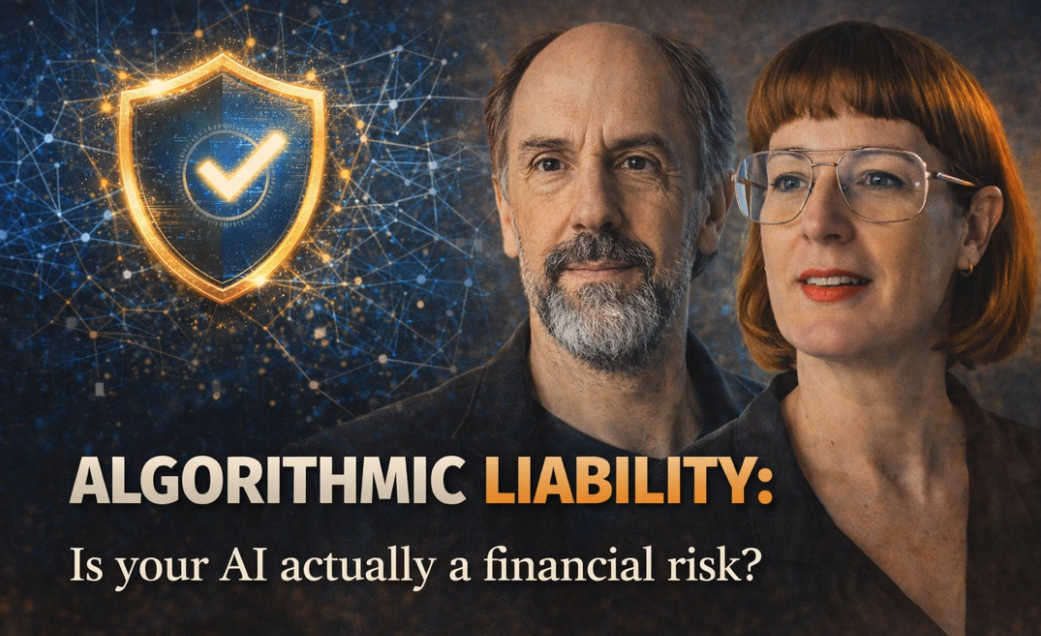
CEO Interview by InnovEU – The EU Project Chronicles
Is your AI a financial risk? Most organizations don't know — because they've never actually measured it. Gemma joined InnovEU – The EU Project Chronicles with @Fernando AC Gaspar to talk about exactly that. The conversation covers algorithmic liability, why auditing AI is a hardcore engineering challenge (not a paper ethics exercise), and what it really takes for innovation to hold up in the environments where it's actually deployed. The episode is sharp, practical, and built for organizations that are moving beyond the hype and starting to ask the harder questions.
Equitable AI for Outcomes
The conversation the sector needs is happening: how do we move AI from a set of principles on paper to systems that actually perform safely and fairly in the environments where they are used? For nonprofits and social sector organisations, the stakes are high and the guardrails are often still weak.

CEO Inerview by our partner, Armilla.ai
We were lucky to catch up with Gemma Galdon Clavell recently and have shared our conversation below.
Auditing AI Enabled Career Advisory Platform
The independent audit by Eticas.ai of Career Scoops AI-enabled career advisory platform for students (ages 13+) was performed post-deployment and focused on the end users in real educational settings. The findings confirmed a safe, reliable and student-appropriate deployment of AI for career exploration, and pointed to a few recommendations for improvement.